Medieval Melbourne
To many Australians, the medieval world exists only in history books, films and fantasy novels. Yet scattered throughout Melbourne is a thriving network of communities keeping many aspects of the Middle Ages alive.
While each community draws inspiration from the medieval world in different ways, they are united by a shared appreciation for its history and craftsmanship. Some seek to faithfully recreate medieval skills and traditions, while others reimagine them through fantasy or performance.
Medieval and fantasy-inspired communities are becoming an increasingly visible part of Australia's cultural landscape. In 2024, Victoria hosted Australia's first national jousting tournament, reflecting a growing interest in medieval sport and performance.
Medieval Melbourne explores this evolving landscape through the people and communities keeping these traditions alive. From grand medieval tournaments and full-contact fantasy battles to blacksmithing and historical craftsmanship, this project documents the many ways the Middle Ages continue to inspire contemporary Melbourne.
Victorian Medieval Festival
Where knights still charge
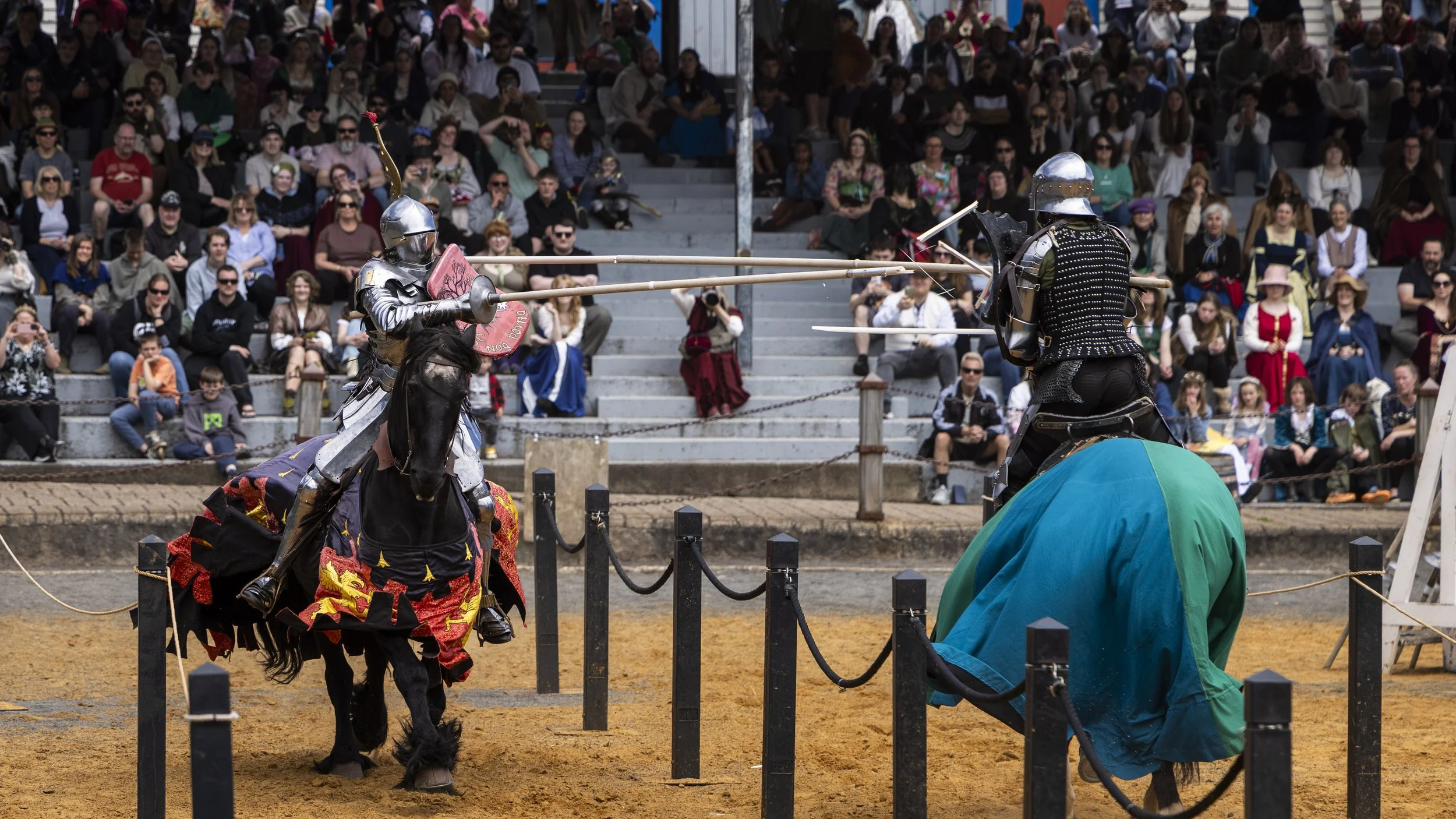
Held annually at Kryal Castle, the Victorian Medieval Festival draws thousands of visitors from across Australia for a weekend celebrating medieval history and spectacle. While visitors can explore blacksmithing demonstrations, medieval cuisine and living history displays, the festival's centrepiece is its famous jousting tournament.
Referred to as a tourney, the event brings more than half a dozen jousters from around the country to compete for the title of Lord or Lady of the Joust.
The festival attracts both in-costume fans and more traditionally dressed attendees. While costumes are entirely optional, many visitors embrace the occasion by arriving in medieval and fantasy-inspired attire.
More than eight hundred years after its heyday, jousting continues to captivate audiences. Each pass, known as a sally, sees riders charge towards one another with lances lowered, hoping to shatter them against their opponent's shield.
Almost everyone has seen jousting portrayed in films, television or video games in some capacity, but witnessing it in person is an entirely different experience. At the signal, the jousters sally forward in a flurry of hoofbeats and the clatter of plate armour. Every successful strike is punctuated by the crack of a splintering lance, drawing an immediate cheer from spectators around the arena.
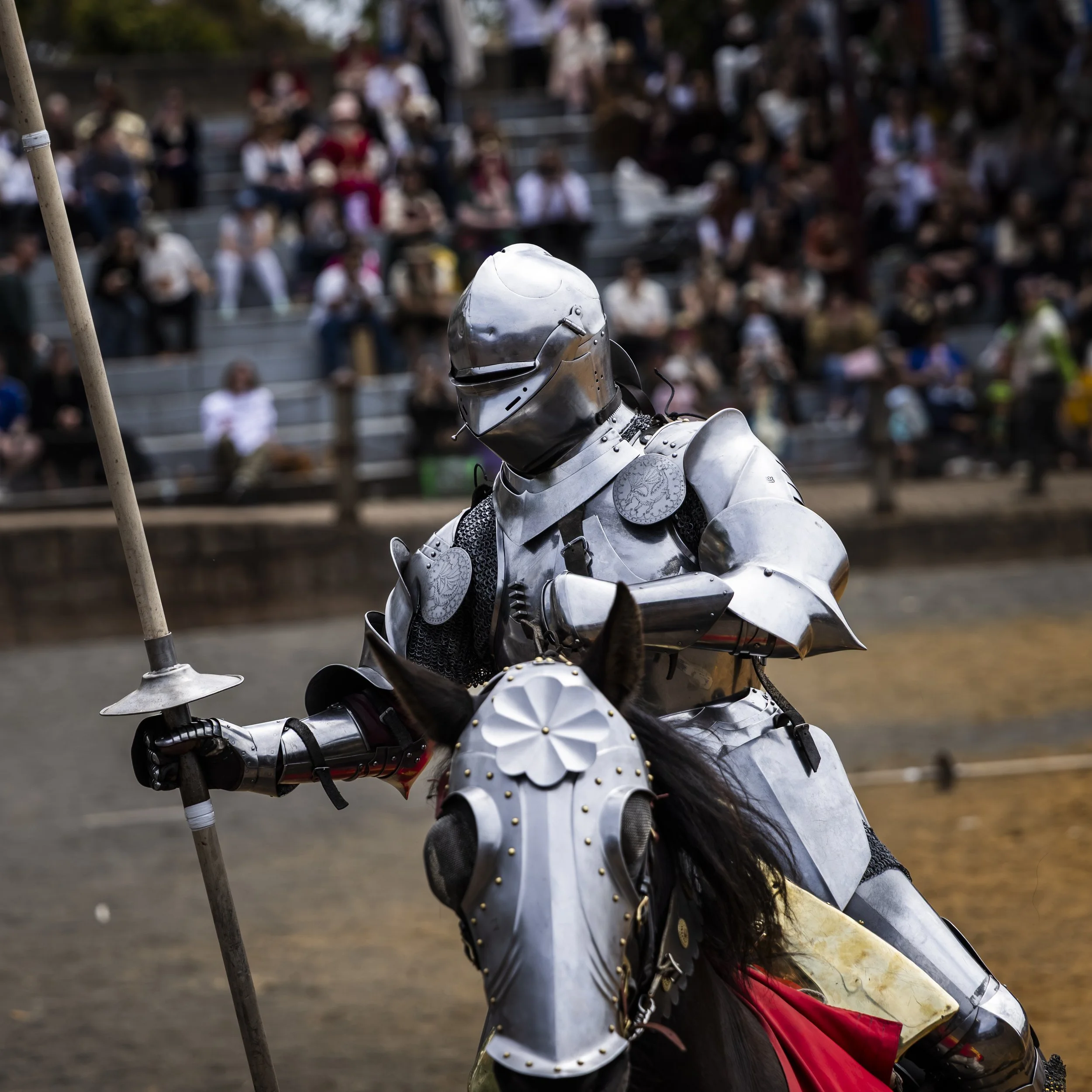
Although medieval jousting was an inherently dangerous sport, modern safety standards help minimise the risks. Riders wear purpose-built protective armour, while modern lances are designed to shatter dramatically on impact, dispersing much of the force while still creating the spectacular shower of splinters audiences expect.
Although the lance is the traditional weapon of the joust, some contests continue after the initial charge, with riders drawing swords for a final exchange on horseback. Riders circle the arena looking for an opening before exchanging rapid blows as they pass one another, providing an impressive display of mounted fighting.
On the field, each jouster is instantly recognisable through their personal heraldry. Distinct colours and coats of arms are used to create a unique identity for each competitor, adding colour to the polished steel of traditional plate armour. Many jousters also adopt personal mottos inspired by the Latin phrases traditionally associated with European heraldry. One standout example is Cedere Nescio (“I know not how to yield”), the personal motto of jouster Rodney Deaman.
Alongside jousting, the festival also features buhurt, a full-contact combat sport that has more in common with boxing than fencing. Combatants are clad in heavy plate armour, typically fighting in teams of three within a chaotic melee.
Although combatants are armed with blunted swords and axes, most exchanges quickly transition into grappling and close-quarters combat as competitors are often quickly disarmed. While jousting celebrates the pageantry of a medieval tournament, buhurt is more akin to the brutal close-quarters fighting that defined medieval warfare.
Although separated from the Middle Ages by hundreds of years, the appeal of the medieval tournament remains remarkably unchanged. Thousands continue to gather each year to witness a spectacle that has captivated audiences for centuries.
Swordcraft
The world’s largest weekly LARP
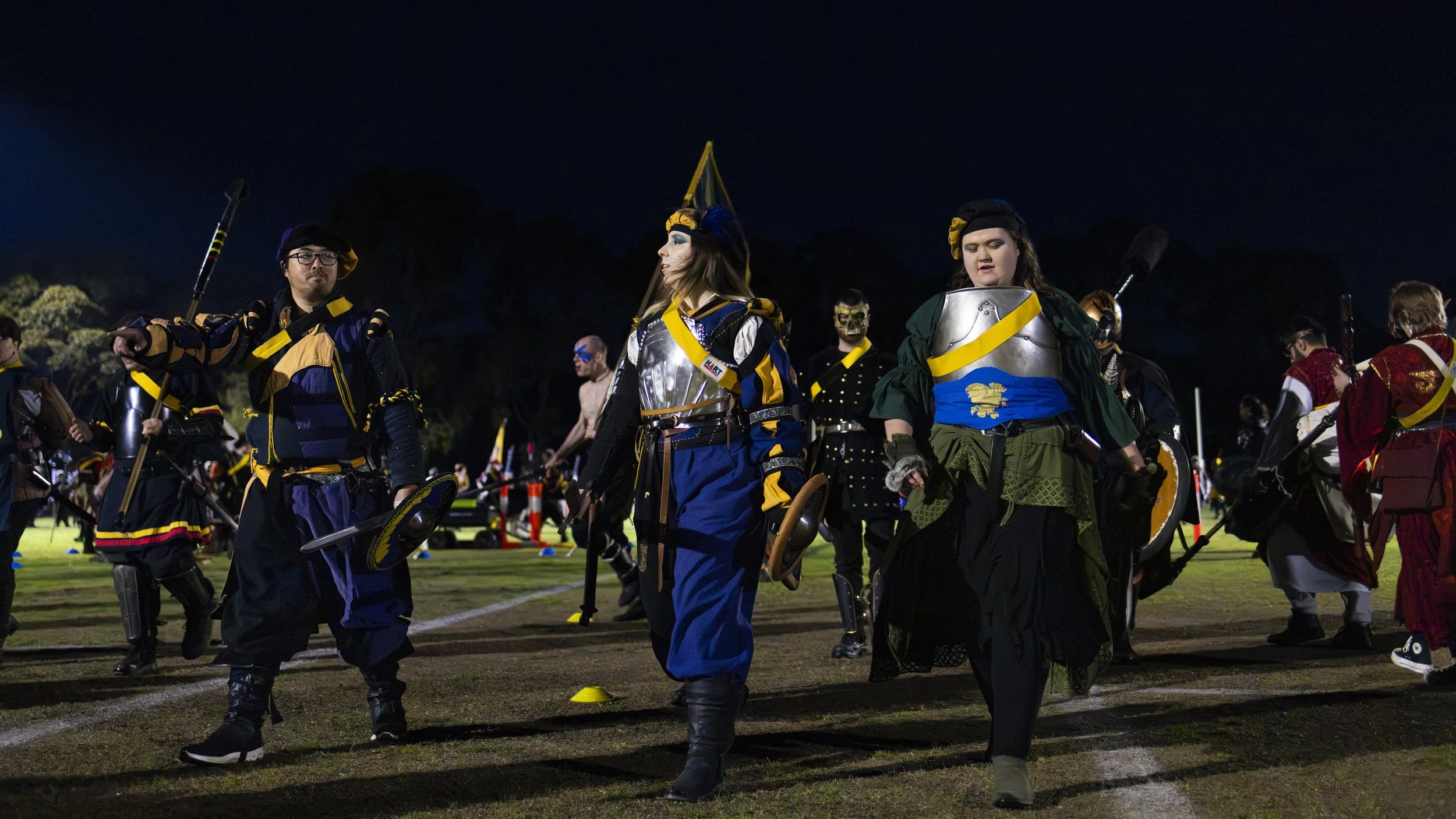
Almost everyone in Melbourne has caught a glimpse of them at one point or another, whether in Royal Park or in the news. Figures clad in armour and armed with foam weapons gather every Friday night, yet for most people they remain simply another curious sight on the journey home.
The gathering is organised by a group called Swordcraft. Once a week, hundreds of participants transform the Western Oval of Royal Park into a sprawling fantasy battlefield. Although attendance fluctuates depending on weather and time of year, Swordcraft Melbourne is widely regarded as the largest weekly LARP event in the world, bringing upwards of 300 players to their Friday night games.
Live Action Roleplay, also known as LARP, is a form of roleplaying where participants take on the roles of fictional characters. Inspired by tabletop roleplaying games such as Dungeons & Dragons, LARP typically combines immersive acting and costumes with medieval or fantasy settings.
On a typical Friday night, players are divided into warbands, each with a unique personality and fighting style. Examples include the Envoys of the Silverglade, an elven-inspired warband renowned for its archery and affinity for fey magic, and the 13th Free Company, a mercenary group portraying hardened soldiers for hire. Warbands also build their own distinct colour scheme, making it easy to distinguish friend from foe in the heat of battle.
Each night, the attending warbands are divided between two opposing teams. The game takes place over multiple rounds each lasting around 5 to 30 minutes. Most rounds revolve around objective-based gameplay, such as capture the flag or king of the hill, where players fight to control a specific area or objective.
While Swordcraft is a full-contact activity, it is designed to be accessible to players of a wide range of physical abilities. Players can fight hand-to-hand with foam weapons or choose ranged weapons such as bows, slingshots, muskets and even spells. Having multiple ways to play opens up the game to people who may not necessarily want to fight in close combat, or simply prefer to keep the enemy at arm’s length.
When it comes to arms and armour, most players bring commercially made weapons alongside handmade clothing and armour. Safety standards for weapons are particularly strict to minimise the risk of injury, so most players purchase them from trusted retailers. Armour, in comparison, is often made by hand. Players can be seen wearing intricately sewn gambesons and forged helmets. For many players, creating armour and clothing is as much a part of the hobby as the battles themselves.
The community is home to many skilled blacksmiths, leatherworkers, tailors and painters, all of whom are eager to lend a hand to players seeking new equipment. Many veteran players own multiple sets of armour and clothing, allowing them to participate in different warbands.
Although Swordcraft has existed for many years, its popularity has grown rapidly since the COVID-19 pandemic. Once catering primarily to a smaller community of fantasy enthusiasts, it has evolved into a diverse community made up of people from all walks of life. Many players describe Swordcraft as a welcoming place for gender-diverse and neurodivergent people, providing a judgement-free environment where players can freely take part in the weekly games.
Spending time with the community reveals just how diverse its members are. Outside the battlefield, players work as mechanics, accountants, engineers, teachers and business owners. One participant even operates a talent recruitment agency for television and film. What started as a small fantasy subculture has expanded to encompass a cross-section of Melbourne’s wider community.
As people have sought new ways to socialise and reconnect with each other in a post COVID-19 world, weekly gatherings such as Swordcraft have offered a place where friendships are forged through shared passions. Outside the oval, the community spills into Parkville, where local fast food restaurants are often filled with knights, mercenaries and elven archers after the weekly battles end.
Many Swordcraft players speak of the social challenges they faced before joining and how the community has breathed fresh life into their social circles. For many, the appeal extends far beyond the weekly game itself. Shared hobbies become lasting friendships, and warbands turn into online gaming groups or D&D parties long after the armour has been packed away.
Tim Harris
Melbourne’s only full-time sword smith
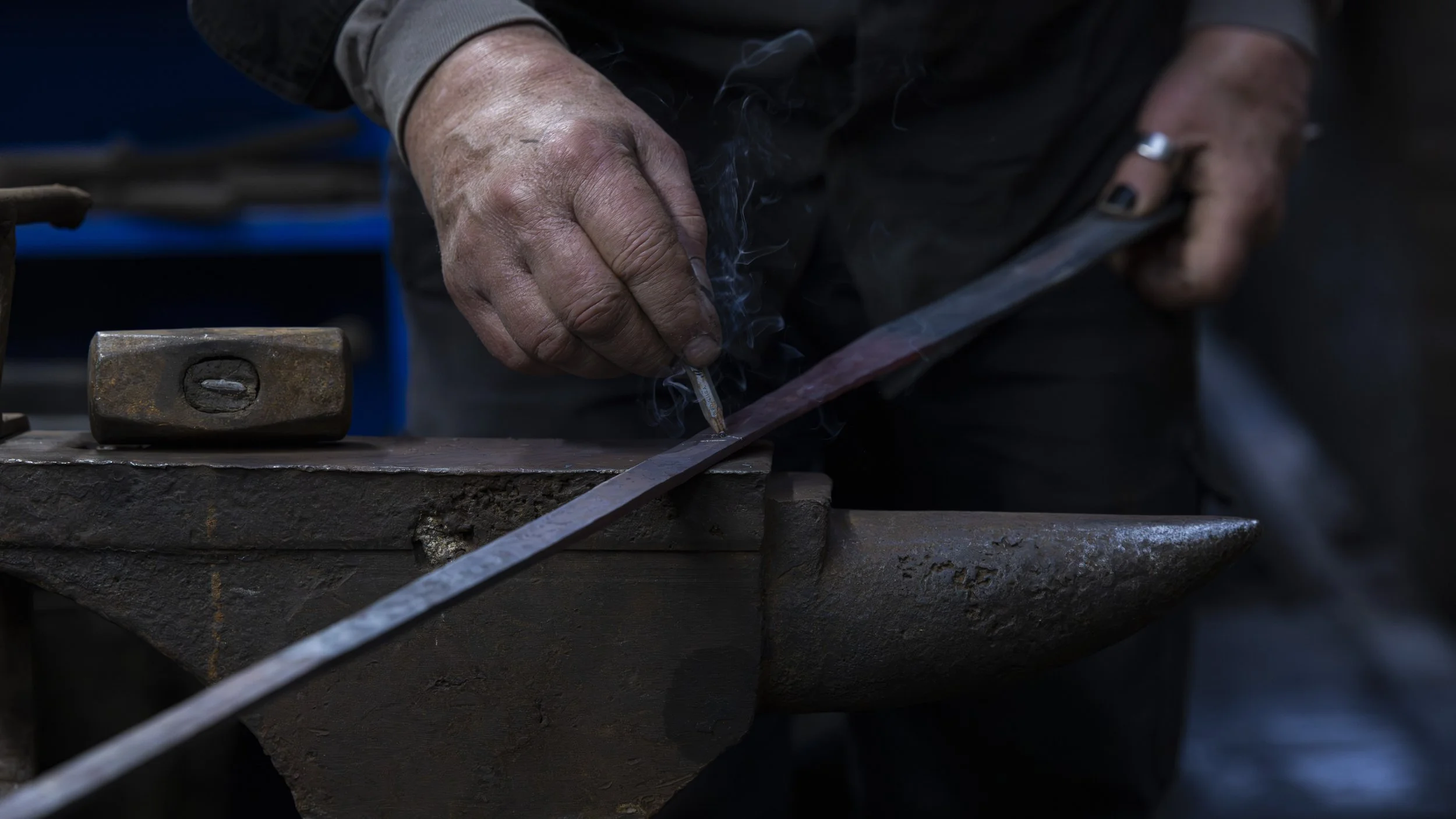
Hidden away in the back of a warehouse in Footscray is Melbourne's only full-time swordsmith, Tim Harris. Harris has been forging swords since the late 1990s, but it was only in 2020 that he launched his business and began working as a swordsmith full-time.
Today, Harris believes he may be the only person in Victoria, and possibly Australia, to make swords as a full-time profession.
According to Harris, dedicating an entire career to sword making remains exceptionally rare in Australia. While many blacksmiths and knife makers occasionally produce swords, he is unaware of anyone else who makes swords as their sole full-time profession.
Before becoming a full-time swordsmith, Harris spent around 16 years as a freelance writer, contributing entertainment and opinion pieces to publications including The Age. After the freelance market declined, he worked in a warehouse while continuing to make swords during evenings and weekends. The COVID-19 pandemic ultimately gave Harris the opportunity to turn his lifelong hobby into a full-time profession.
Every sword begins life as a length of automotive spring steel. Heated until glowing orange in the forge, the steel is then shaped by repeated hammering before undergoing heat treatment, finishing and final assembly by hand. Although modern machinery assists with some stages of production, such as a gas-burning forge and a pneumatic power hammer, each sword still requires many hours of manual craftsmanship before it is complete.
Although the rough outline of the blade becomes visible early in the forging process, it is only the beginning of the process. Layers of oxidised steel, known as forge scale, flake away after each heat, while the blade is repeatedly reheated and shaped before it is ready for the next stage.
After forging, the blade is carefully ground and refined to achieve its final shape. This stage removes any imperfections left by the forging process, while gradually defining the blade's profile and handling characteristics. Much of Harris' work is produced for Historical European Martial Arts (HEMA) practitioners. Years spent training alongside Melbourne's HEMA community have shaped his understanding of how historical swords should handle, allowing him to produce blades that feel authentic despite their blunted edges.
Sword making is rarely a linear process. While one blade awaits heat treatment, Harris turns his attention to other components, fabricating guards, pommels and fittings before returning to the blade later. His workshop is rarely focused on a single sword, with multiple commissions progressing simultaneously through different stages of production.
The final stages of sword making often move from steel to timber. Harris frequently uses hardwood offcuts from neighbouring furniture makers, giving discarded pieces of walnut and other hardwoods a second life as sword grips. Each grip is sanded by hand and fitted to the blade before being left exposed or wrapped in leather or wire, depending on the commission.
Although he occasionally receives enquiries from people wanting apprenticeships, he says the economics of such a specialised craft make it impossible to employ someone at present. Nevertheless, he does not see swordsmithing as a dying art, rather it remains a highly specialised craft practised by a small number of dedicated individuals.
After more than twenty-five years at the forge, Harris still believes every sword teaches him something new. In a profession that has all but disappeared from Australia, his work represents hundreds of years of tradition, and a lifelong commitment to preserving and refining an ancient craft.